BREAKING NEWS!! Just in 5 minute ago…
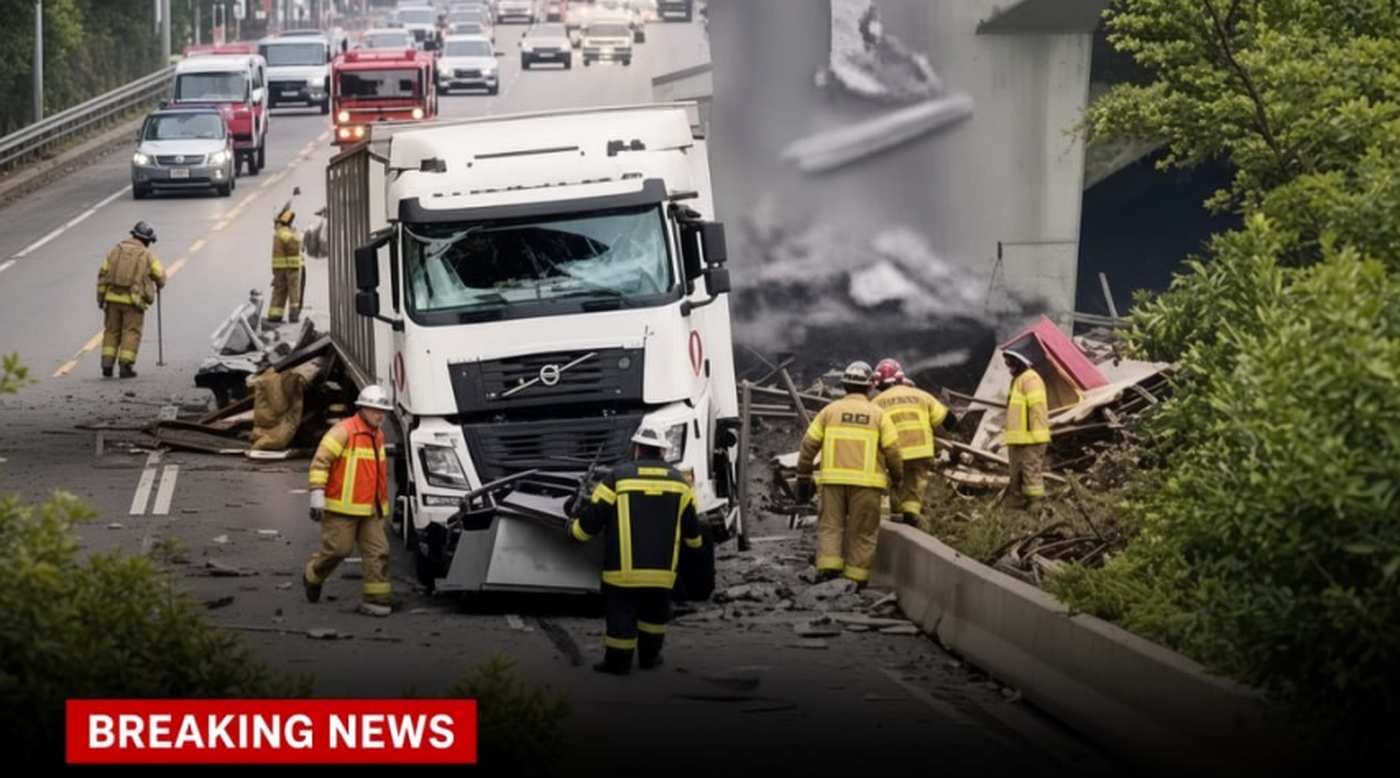
On a quiet Friday morning in Richmond, British Columbia, commuters faced an unexpected disruption when a commercial truck collided with the Cambie Road overpass on Knight Street. The crash occurred around 7:15 a.m. Pacific Time, forcing the closure of all southbound lanes and triggering a full structural inspection of the overpass and bridge deck.


Southbound closure at Knight Street Bridge in Richmond
According to investigators, the commercial vehicle was towing a dump trailer in a raised position when it attempted to pass under the structure. The trailer failed to clear the overhead span and struck the overpass, becoming lodged against it. The force of the collision detached the truck cab from the trailer, which came to rest some distance away. No injuries were reported, but the impact was strong enough to prompt immediate concern about the bridge’s stability. City officials and provincial engineers quickly arrived on site to evaluate potential structural damage before reopening the road. Immediate response and safety assessments


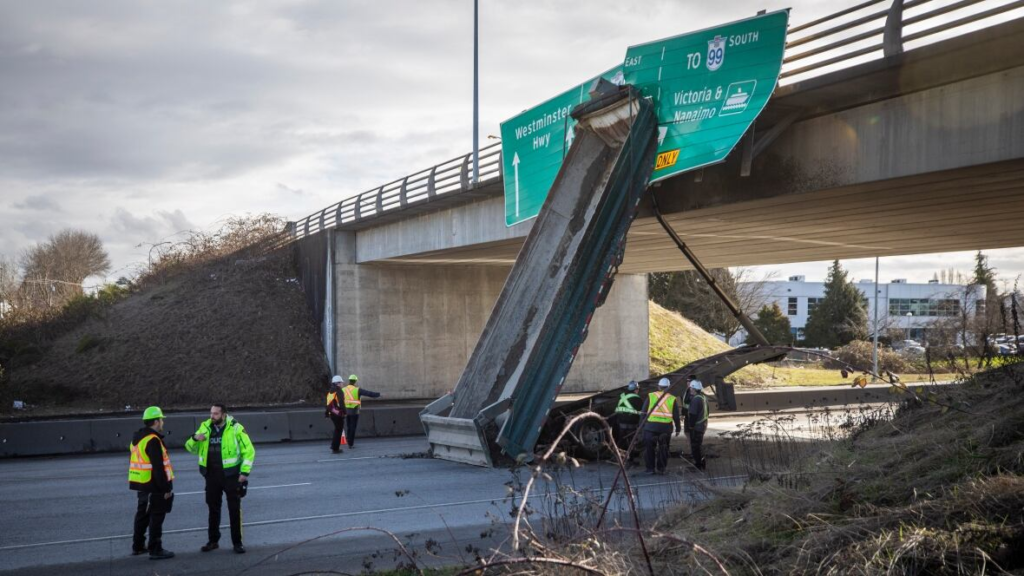
The City of Richmond confirmed that while the section of highway falls under provincial jurisdiction, municipal engineers joined the investigation to support the Ministry of Transportation and Infrastructure. Their goal was to determine whether the bridge could safely handle traffic loads after the collision.
A recurring issue in British Columbia
By late morning, the trailer bed remained pressed against the concrete span while crews worked to remove debris and stabilize the area. Police advised motorists to seek alternate routes, acknowledging the heavy congestion caused by the closure. The Richmond Road Safety Unit (RSU) has taken over the investigation, working closely with the provincial ministry to conduct a detailed structural and engineering review. Their examination includes checking for cracks, joint displacement, or weakened support beams caused by the impact.

This was not an isolated incident. In recent years, several commercial vehicles have collided with overpasses across the Lower Mainland and Fraser Valley. Provincial data show a rising pattern of over-height trucks striking bridges and infrastructure, prompting renewed scrutiny of both driver conduct and infrastructure management. Last year, a similar crash occurred in Langley, marking the eighth such collision on provincial highways in a single year. These accidents often share a common cause: raised truck beds, improperly measured loads, or inadequate awareness of height restrictions.
Industry reactions and calls for reform
While driver error remains a significant factor, industry experts stress that the problem also reflects aging infrastructure and inconsistent signage. The province’s database of bridge and overpass strikes cites several incidents in which clearance signs were missing or inaccurate, or where resurfacing work reduced the vertical clearance available to passing vehicles.
The British Columbia Trucking Association (BCTA) has urged authorities to adopt a more comprehensive safety approach. The organization argues that technology such as over-height detection systems—using laser or infrared sensors—should be installed at key locations to warn drivers before reaching low overpasses. At the same time, fleet operators are being reminded to improve training protocols. Drivers should verify trailer bed positions, check height limits before travel, and ensure that hydraulic or dump mechanisms are fully secured. Proper pre-trip inspections are essential to prevent costly and dangerous oversights. Transportation experts also highlight the value of data-driven prevention. By tracking overpass incidents, agencies can identify recurring problem areas, prioritize high-risk corridors, and guide future infrastructure investments.
Engineering perspective: understanding the risks
Structural engineers note that even if an overpass appears intact after a collision, hidden damage may still exist. Impacts of this type can strain internal reinforcements, loosen joints, and compromise long-term durability. Each strike must therefore be treated as a potential safety threat, requiring detailed inspections and sometimes temporary reinforcement before reopening to the public. These reviews often involve visual assessment, non-destructive testing, and load simulations to confirm that the bridge can safely resume service. Engineers working on the Knight Street collision emphasized that thorough evaluation is critical not only for public safety but also for preventing future failures that could be far more costly to repair. The closure of a key artery such as Knight Street Bridge creates ripple effects throughout the region’s transportation network. Richmond serves as a central hub for commercial trucking between Vancouver, Delta, and the Fraser Valley. A prolonged closure can delay deliveries, increase fuel costs, and disrupt logistics operations.
Broader traffic and economic consequences
For local residents, the event added hours to commutes as vehicles diverted to secondary routes like No. 5 Road and Shell Road. Businesses dependent on daily deliveries also faced short-term supply delays. Such disruptions underscore the importance of preventive safety measures. Each overpass collision not only risks structural damage but also causes financial strain for both government and private companies through repair costs, downtime, and insurance claims. Safety experts propose a combination of technological and educational strategies to reduce future incidents: Over-height detection systems : Advanced laser sensors can detect tall loads and trigger flashing signs warning drivers to stop or reroute. Real-time fleet monitoring : GPS-based systems can alert fleet managers when trucks approach restricted-height routes. Driver training and awareness : Regular safety programs reinforce the importance of checking trailer height, especially for dump trucks or hydraulic trailers. Infrastructure audits : Periodic checks of clearance signs and bridge elevations ensure that resurfacing or structural changes do not inadvertently reduce safe clearances.
Preventive technology and training initiatives
Transportation engineer Dr. Steven Fong of the University of British Columbia has noted that while these technologies are valuable, they must be part of a broader “safety ecosystem.” According to Fong, “No single tool can eliminate accidents—effective prevention depends on a culture of accountability shared between drivers, fleet operators, and highway authorities.” The Richmond crash adds to a growing debate about Canada’s transportation safety priorities. Many experts argue that while the country’s infrastructure remains robust, it is aging faster than maintenance budgets allow. As freight volumes increase and commercial vehicles become larger, modernization of bridges and overpasses becomes more urgent. Policy makers are now examining whether to require over-height detection equipment on major commercial corridors, similar to measures already in place in some U. S. states. Other proposals include integrating clearance databases directly into GPS navigation tools for truck drivers, reducing reliance on manual signage. Public safety advocates also emphasize transparency and communication. When overpass collisions occur, prompt public updates and clear timelines for reopening help maintain confidence in the safety of transportation networks.
Broader implications for transportation policy
The Knight Street collision illustrates how a single human or mechanical oversight can disrupt an entire region. While no one was harmed, the costs—financial, logistical, and administrative—were significant. Repair estimates for similar overpass incidents in British Columbia have reached into the millions, often funded by both insurance and public infrastructure budgets. For city and provincial officials, this serves as a reminder that proactive prevention is far more cost-effective than post-incident reconstruction. For the trucking industry, it is a renewed call to strengthen training, enforce maintenance checks, and invest in technology that mitigates risk. Ultimately, ensuring safety on critical routes like Knight Street Bridge will depend on continued collaboration between drivers, companies, engineers, and government agencies. The incident may have been contained quickly, but the lessons it offers carry lasting value for all sectors of transportation. Though the collision caused no physical harm, it reflects a recurring pattern that demands systematic attention. Heavy-haul vehicles remain essential to Canada’s economy, but their interaction with aging infrastructure presents growing challenges. The Richmond incident reinforces the need for vigilant inspection, investment in modern detection systems, and sustained education within the trucking community.
Lessons from the Richmond incident
By approaching road safety as a shared responsibility—combining technology, enforcement, and awareness—communities can prevent such disruptions and protect both lives and livelihoods in the years to come.